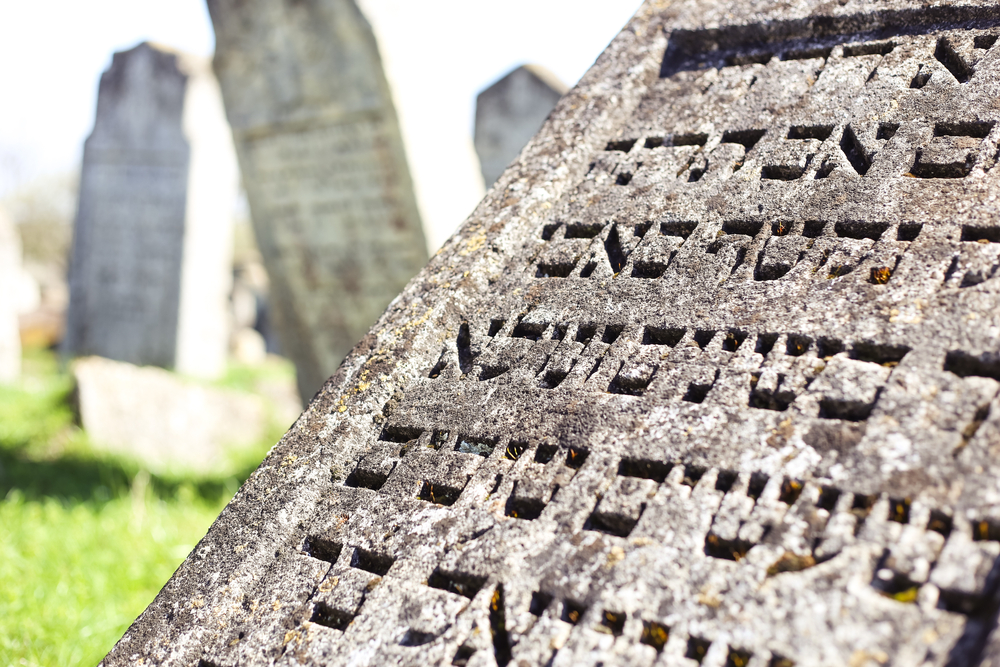
Jewish monuments, or matzeivah (sometimes spelled matzeivah or matzevah), are created through a thoughtful design-to-installation process that reflects centuries of Jewish tradition, religious values, and cultural customs. These memorials are not simply grave markers; they are sacred symbols of remembrance, respect, and continuity. Most Jewish monuments begin with simple, dignified designs crafted from durable materials such as granite or bronze. Hebrew and English names, dates of passing, and meaningful Jewish symbols—most commonly the Star of David—are carefully incorporated to honor both faith and legacy.

In the Jewish burial tradition, monuments play an essential role in the grieving process and help preserve the memory of a loved one for generations. Jewish law (Halacha) emphasizes kavod ha’met, or honoring the deceased, and Jewish monuments provide a permanent expression of that respect.
Traditionally, families veil Jewish monuments for approximately one year after a loved one’s passing, until they hold the Jewish unveiling ceremony. After the unveiling, the monument becomes a meaningful place where family and friends visit, reflect, recite prayers such as Tehillim (Psalms), and remember precious moments shared with the deceased.
Modern monument creation techniques now offer a wide range of design elements, lettering styles, and symbolic details while continuing to respect Jewish tradition. These advancements allow monument artists to create lasting, deeply personal memorials that honor faith, family heritage, and individual life stories. In this blog post, we explore how Jewish monuments are created using the sandblasting technique and how tradition and technology come together in the process.
The Sandblasting Technique Has Not Always Been Around
As previously mentioned, the Jewish unveiling ceremony stands at the center of Jewish memorial customs. This tradition traces back to ancient times, when Jewish families often created memorials themselves. Using only basic hand tools, family members or community craftsmen carved inscriptions directly into stone, a process that demanded extraordinary effort, time, and physical labor.
Because monument creation required such intense labor, completing the headstone marked a moment of deep significance. Families gathered to view the finished matzeivah, offered prayers, and honored the deceased—practices that ultimately formed the foundation of the unveiling ceremony. This tradition reinforced the idea that a monument serves not only a functional purpose, but also a deeply emotional and spiritual one.
The modern custom grew out of these early practices. While today’s monument creation relies on advanced tools and technology, the purpose remains unchanged: to give families the time and space to grieve, reflect, and formally acknowledge the permanence of the memorial. The unveiling ceremony continues to provide closure and a sacred moment of remembrance, linking present-day families with centuries of Jewish tradition.
What is Sandblasting?
Sandblasting is a specialized technique that engraves and shapes stone by directing a high-pressure stream of abrasive material—typically sand or a similar substance—against the stone’s surface. In Jewish monument creation, sandblasting delivers exceptional precision, consistency, and durability while preserving the dignified appearance required by Jewish custom.
This technique has revolutionized Jewish monument creation. Where hand-carving once limited the level of detail, sandblasting enables monument artists to produce crisp Hebrew lettering, balanced English inscriptions, and finely detailed Jewish symbols. Just as importantly, the process preserves the stone’s strength, ensuring the monument endures for generations.
At Fox Monuments, our artisans use sandblasting thoughtfully and selectively, always respecting Jewish tradition and cemetery regulations governing Jewish burial grounds. The process typically follows four primary steps.
4 Steps to Sandblasting1. Concept and Image Rendering Process
Before any physical work begins, the Jewish monument creation process starts with careful planning and consultation. Families make several important decisions regarding the inscription, one of the most meaningful aspects of the memorial.
Key choices include how the deceased’s name appears in Hebrew and English, whether the Hebrew name includes lineage (such as “ben” or “bat,” meaning “son of” or “daughter of”), and whether the inscription includes traditional phrases such as “Po Nikbar” (“Here lies”) or “Tehei Nafsho Tzrurah B’Tzror HaChaim” (“May their soul be bound in the bond of eternal life”).
Families may also select an epitaph, meaningful dates using both the Hebrew and Gregorian calendars, and symbolic imagery. After families finalize these decisions, the Jewish monument artist renders the design using CAD (computer-aided design) software. This digital rendering perfects spacing, alignment, Hebrew lettering accuracy, and overall balance before production begins.
2. Creating the Template for Sandblasting
After the final design is approved by the family, the next step is creating a highly accurate sandblasting template. Precision is critical, especially when working with Hebrew text, which reads from right to left and requires exact spacing to preserve meaning and tradition.
Jewish monument creators use specialized printers to produce a detailed template of the approved design. This template outlines every letter, symbol, and decorative element. The outlined areas are then carefully cut away using a stencil, leaving open sections where the sandblasting will occur.
This step ensures that all lettering, Jewish headstone symbols, and decorative details remain sharp and distinct. At Fox Monuments, this stage is handled with exceptional care. The quality of the final memorial depends heavily on the accuracy of the template.
3. Sandblasting
Once the stencil is complete, it is securely affixed to the stone, typically using industrial-grade adhesive. The headstone is then placed inside a sandblasting booth designed to contain the abrasive material and protect the surrounding environment.
During sandblasting, the monument artist directs the abrasive stream toward the exposed areas of stone. This process removes the polished surface layer, revealing the natural texture beneath. By controlling the depth and intensity of the sandblasting, the artist creates contrast between polished and engraved areas. This gives the monument its distinctive appearance.
Some sections may be blasted deeper than others to emphasize lettering or symbols. These symbols include the Star of David, menorahs, or hands in the priestly blessing, which signify a Kohen. This controlled process allows the artist to shape a monument that is both visually striking and respectful of Jewish tradition.
4. Final Embellishments By Hand
After sandblasting is complete, the monument artist performs final refinements by hand. Using specialized tools, the artist enhances fine details, smooths edges, and ensures the inscription is flawless.
This step is particularly important for Hebrew lettering, where even small imperfections can alter meaning or appearance. Hand-finishing ensures that the monument meets the highest standards of craftsmanship and honors the sanctity of the memorial.
The Sandblasting Technique Won’t Work for All Designs
While sandblasting is ideal for many Jewish monument designs, some inscriptions and images require an even higher level of detail. Portraits, highly intricate artwork, or complex scenes often cannot be achieved through sandblasting alone.
In these cases, skilled Jewish monument artists rely on traditional hand-carving techniques. Hand inscription allows for greater artistic control and detail. It ensures that even the most complex designs are rendered with precision and respect.
Jewish Monument Design and Inscription
At Fox Monuments, we understand that creating a Jewish monument is both a technical process and a sacred responsibility. Our experienced monument artists are deeply familiar with Jewish customs, Hebrew language requirements, and cemetery regulations.
With your family in mind, we create monuments that honor tradition, preserve memory, and stand the test of time. Each memorial is crafted with care, respect, and attention to detail—ensuring it serves as a lasting tribute and a place of comfort for generations to come.